

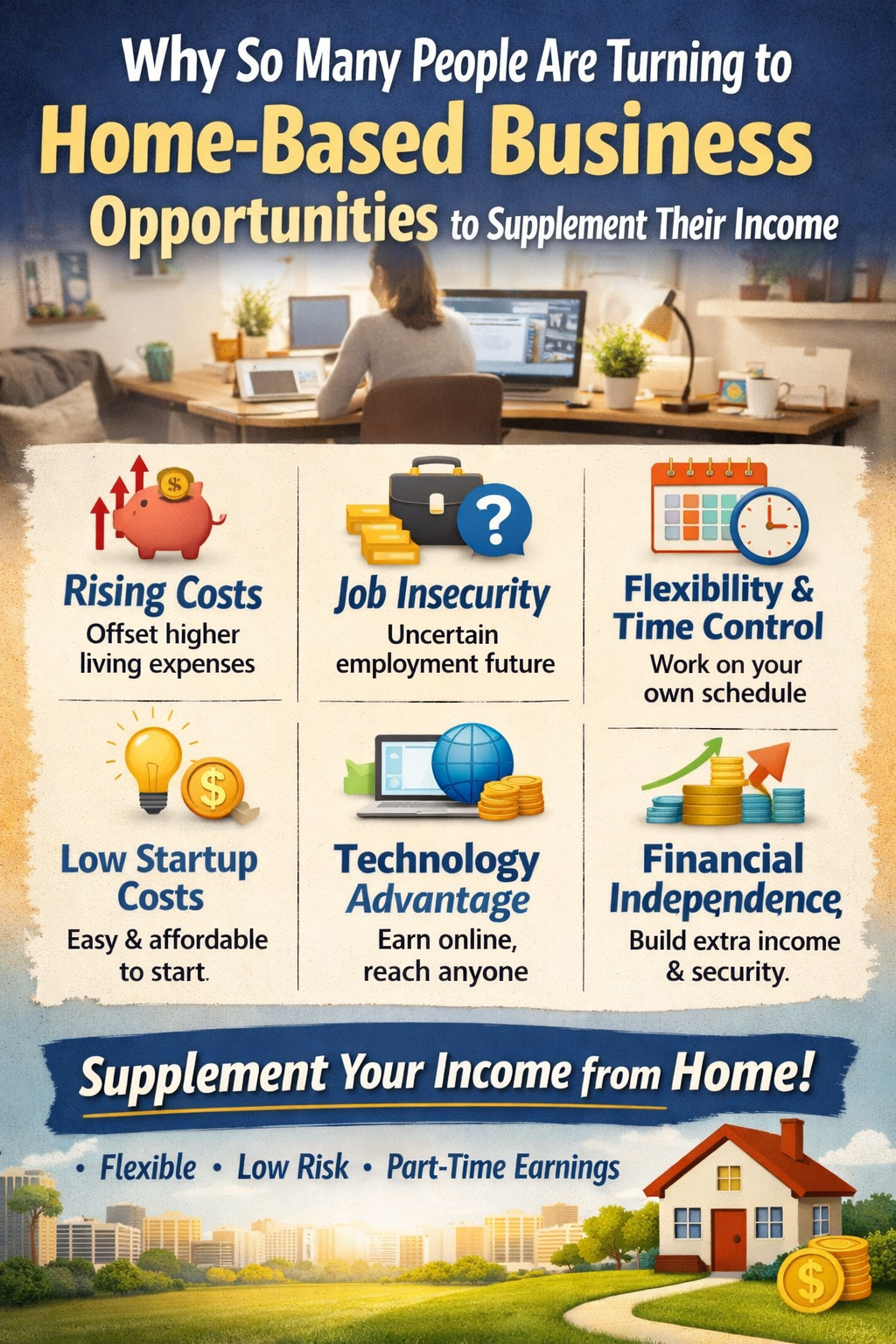
Over the past few years, a noticeable shift has taken place in how people think about work and income. More individuals than ever are exploring home-based business opportunities as a way to supplement what they earn from traditional jobs. This trend isn’t driven by hype—it’s a practical response to real economic and lifestyle changes.
Here’s why home-based income streams are becoming so popular.
Rising Costs and Stagnant Wages
For many households, the math simply doesn’t add up anymore.
The cost of groceries, housing, utilities, and transportation continues to rise, while wages often stay the same or grow very slowly.
A home-based business gives people a way to:
- Offset higher living expenses
- Create breathing room in their monthly budget
- Reduce dependence on a single paycheck
Instead of cutting back endlessly, many are choosing to add an additional income stream.
Job Security Is No Longer Guaranteed
Long gone are the days when one employer could be relied on for decades. Layoffs, downsizing, automation, and AI have made job security feel uncertain across many industries.
As a result, people are asking a new question:
“What happens if my primary income disappears?”
Home-based businesses offer a form of income diversification—a backup plan that doesn’t rely on one company, one manager, or one role.
Flexibility and Control Over Time
One of the biggest draws of a home-based business is flexibility. Unlike a second traditional job, many home-based opportunities allow people to work:
- Evenings or weekends
- Around family responsibilities
- At their own pace
This flexibility makes it possible for parents, retirees, and full-time workers alike to earn extra income without sacrificing their entire personal life.
Low Startup Costs Compared to Traditional Businesses
Starting a brick-and-mortar business can require tens of thousands of dollars, long leases, and significant risk. Many home-based business models, by contrast, have:
- Low monthly costs
- No physical inventory
- No need for office space or staff
This lower barrier to entry makes entrepreneurship accessible to everyday people—not just those with large amounts of capital.
Technology Has Leveled the Playing Field
The internet has removed many of the obstacles that once made business ownership difficult. Today, people can:
- Work entirely online
- Use automation to handle repetitive tasks
- Reach customers globally from a laptop or phone
What once required teams and offices can now be managed from home, making supplemental income far more realistic.
Desire for Financial Independence
Beyond money, many people are motivated by a deeper goal: control over their financial future.
A home-based business can:
- Build skills that transfer across industries
- Create recurring or residual income over time
- Offer a sense of ownership and empowerment
Even a modest additional income can reduce stress and increase confidence about the future.
Not About Replacing a Job—About Strengthening Stability
It’s important to note that most people aren’t quitting their jobs overnight. Instead, they’re:
- Testing opportunities part-time
- Building income gradually
- Creating options before they need them
This cautious, practical approach is exactly why home-based businesses are gaining trust and traction.
Final Thoughts
The rise of home-based business opportunities isn’t a trend—it’s a response to economic reality. As expenses rise, job security shifts, and technology opens new doors, people are choosing to take more control over their income.
For many, supplementing their earnings from home isn’t about chasing a dream—it’s about creating stability, flexibility, and peace of mind in an unpredictable world.