
In today’s digital-first world, more people than ever are choosing to run businesses from home—and for good reason. While traditional brick-and-mortar businesses still have their place, the advantages of a home-based business make it an increasingly attractive option for entrepreneurs, side hustlers, and anyone seeking more freedom and flexibility.
Let’s break down the key benefits of a home business compared to a brick-and-mortar operation.
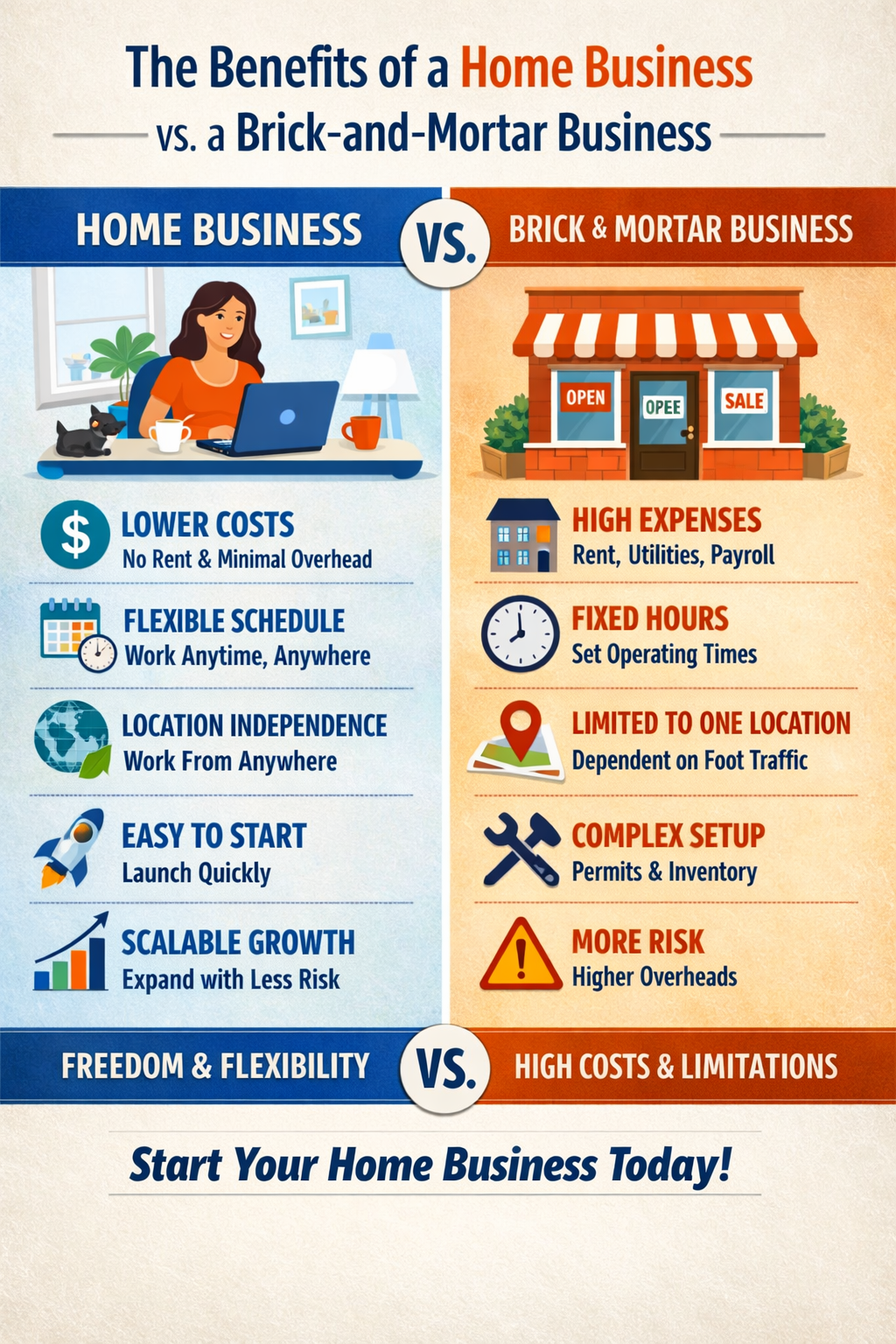
1. Significantly Lower Startup and Operating Costs
One of the biggest barriers to starting a traditional business is cost.
Brick-and-mortar businesses require:
- Commercial rent or mortgage
- Utilities, insurance, and maintenance
- Furnishings, signage, and renovations
- Staff wages and payroll expenses
Home businesses often need:
- A computer and internet connection
- Basic tools or software
- Minimal overhead
Lower expenses mean less financial risk and faster profitability—especially important for beginners.
2. Flexibility and Control Over Your Schedule
Running a brick-and-mortar business usually means:
- Fixed hours
- Being physically present
- Limited personal time
With a home business, you gain:
- Flexible working hours
- The ability to work around family or other commitments
- More control over your lifestyle
This flexibility makes home businesses ideal for parents, retirees, and anyone seeking better work-life balance.
3. Location Independence
A traditional business ties you to a physical location. If foot traffic drops or the area declines, your business suffers.
A home business—especially one online—allows you to:
- Work from anywhere
- Reach customers globally
- Move without disrupting your income
This freedom is especially valuable in an increasingly remote and digital economy.
4. Faster and Easier to Launch
Opening a brick-and-mortar business can take months due to:
- Permits and licenses
- Construction or renovations
- Inventory setup
Many home businesses can be launched in days—or even hours. This means you can test ideas quickly, pivot easily, and adapt to market changes without major losses.
5. Easier to Scale With Less Risk
Scaling a physical business often means:
- Hiring more staff
- Expanding locations
- Increasing fixed costs
Home businesses, especially online models, can scale by:
- Leveraging automation
- Using digital marketing
- Expanding reach without major overhead increases
This makes growth more predictable and less stressful.
6. Better Profit Margins
Lower overhead + automation = higher margins.
With fewer expenses eating into revenue, home business owners often keep a larger percentage of what they earn compared to brick-and-mortar owners who face constant operational costs.
7. Ideal for Part-Time or Side Income
Brick-and-mortar businesses usually demand full-time commitment.
Home businesses allow you to:
- Start part-time
- Build income alongside a job
- Transition gradually into full-time entrepreneurship
This makes them a practical and safer path to financial independence.
Final Thoughts
While brick-and-mortar businesses still work in certain industries, the advantages of a home business—lower costs, flexibility, scalability, and lifestyle freedom—make it a smarter choice for many modern entrepreneurs.
In a world driven by automation, remote work, and online systems, home-based businesses are no longer the future—they’re the present.
🚀 Ready to Start Your Own Home Business?
If you’re looking for a simple, low-cost way to build income from home—without the traditional risks of a brick-and-mortar business—now is the perfect time to explore your options.
👉 Take the first step toward financial freedom today.