

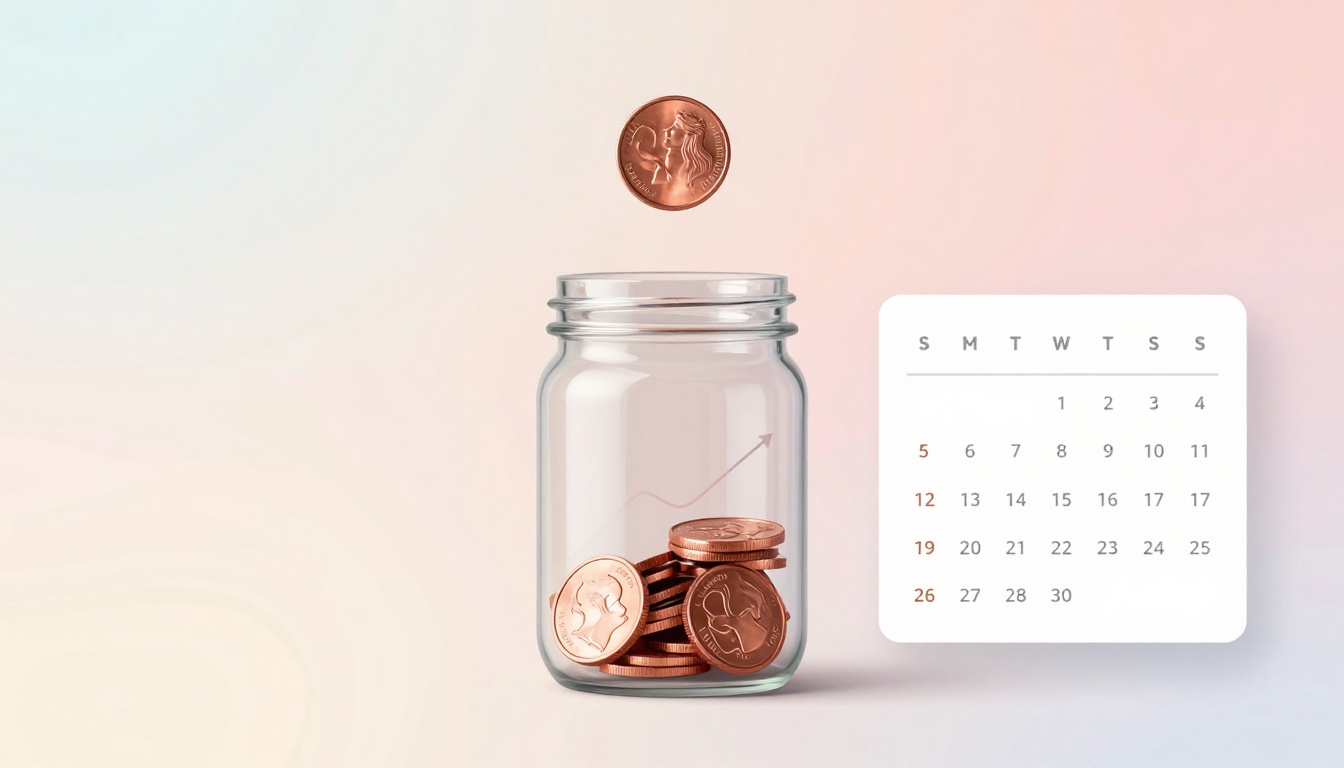
$0.67 per day doesn’t sound like much. It’s the kind of number you’d ignore on a receipt but can lead to Financial Freedom.
But $0.67 per day is about $20 per month, and that’s enough to start a system, not a fantasy. Not a “quit your job next week” plan. A calm, repeatable way to create breathing room, then build toward Financial Freedom one small decision at a time.
By the end of this post, you’ll have a simple plan you can run for 30 days, a short weekly scorecard to keep you from quitting early, and a clear picture of how Save Club can fit if you want a savings tool with an optional income side.
The real power of $0.67 a day is what it replaces in your budget
Financial Freedom starts with one thing: cash flow you control. Not perfect budgeting, not earning a huge income overnight, just a little space between what you make and what you spend.
Most people don’t lose money in one dramatic blow. They lose it in tiny leaks: a snack on the go, a delivery fee, a random subscription, an impulse buy that felt harmless. It’s like a slow drip under your sink. You don’t notice it on day one, but the cabinet is wrecked a month later.
In 2026, this is more real than ever. Many people are trying to cut back on small daily purchases (one survey trend shows 59% plan to do this) and nearly half are aiming for more mindful spending. The point isn’t guilt. It’s awareness.
Here’s the shift: instead of “I need to stop spending,” think “I’m going to redirect spending I already do into something that pays me back.” That mindset keeps you from feeling deprived, which is the main reason people quit.
Quick math anyone can do, $0.67 a day adds up fast
No fancy formulas. Just simple math that makes the habit feel real.
Time frame$0.67 saved per dayRounded30 days$0.67 x 30 = $20.10About $20365 days$0.67 x 365 = $244.55About $245
$245 in a year won’t “fix” your whole life. But it can:
- Start a small emergency buffer
- Cover a few months of a tool you use to save money
- Prove to yourself that you can stick to a plan
That proof matters. A lot.
Save Club Testimonies – Product Savings
If you want a bigger example of how daily saving adds up in real accounts, see this breakdown on saving a little each day in a high-yield account.
The Freedom Gap, why most people never get ahead
The “Freedom Gap” is simple: it’s the space between income and expenses. If your gap is $50 a month, one surprise bill wipes it out. If your gap is $300, you can handle problems without panic.
Here’s a story that’ll feel familiar.
You start a side hustle and promise yourself you’ll save. Week one goes great. Then the car needs a tire. Then a kid needs a school fee. Then a subscription renews you forgot about. You didn’t fail. You just didn’t have a buffer.
This is why “make more money” isn’t step one. Step one is building a little gap, then protecting it.
And the stats show how common this is. Recent reporting has highlighted that a large share of adults have less than a month of expenses saved, and many have no savings at all. That’s why small habits aren’t cute, they’re necessary. For context, Bankrate has visual data on how small savings can add up over time.
Turn $20 a month into a simple system, save first, then earn
If you want a plan that actually sticks, keep it in this order:
- Cover the cost with savings first
- Track results weekly
- Add a small income engine (optional)
That order keeps you honest. It removes pressure. It also keeps your message clean if you decide to share what you’re doing.
Think in 30, 60, and 90-day blocks. Not “forever.” Just the next block.
- 30 days: prove you can cover the cost
- 60 days: build consistency, collect real results
- 90 days: consider scaling, sharing, or adding extra routines
Step 1, make the membership pay for itself with weekly savings targets
You don’t need $20 in savings tricks. You need one target you can hit weekly.
A simple goal: save $5 per week in places you already spend.
Start with everyday categories:
- Groceries (one swap, one coupon, one store deal)
- Gas (discounts, partner offers, better timing)
- Dining (a deal, a cash-back offer, a smaller habit)
- Travel (even one hotel booking can matter)
- Online shopping (cash-back offers, price checks)
This is “break-even thinking.” Once your savings cover the monthly cost of a tool, the rest is upside.
Also, don’t ignore the boring wins. Cancel one unused subscription. Delay one impulse buy by 24 hours. Those count.
Step 2, track one simple scorecard so you do not quit early
Most people don’t quit because the plan is “bad.” They quit because they can’t see progress, and their brain assumes nothing is happening.
Use a weekly scorecard with three numbers:
- Dollars saved this week
- Dollars earned this week (optional, even if it’s $0 at first)
- People helped this week (shares, screenshots sent, referrals, or simple conversations)
Keep it in your phone notes. One minute, once per week.
Progress is usually boring early on. That’s normal. Consistency is what turns boring into reliable.
Save Club, the $0.67 a day tool that helps you save money and build income
Save Club is a membership app designed to help you save money through discounts and automatic cash-back style offers across common spending categories (shopping, dining, travel, and more). Many people talk about it in “$0.67 per day” terms because the membership is often presented around $19.97 per month (confirm current pricing on the tour or checkout page, since offers can change).
From recent updates shared publicly, Save Club has also been talking about newer tools (including AI-style automation features released in late 2025) aimed at helping affiliates follow up and share the membership more easily. Whether you use any automation or not, the core idea stays simple: save on things you already buy, then share if you want to earn.
One smart habit before you join any savings membership is to check outside opinions and reviews. For example, you can scan the general sentiment on Save Club ratings on Trustpilot and look for patterns (support, ease of use, and how people describe the savings).
How Save Club works in real life, link your cards, shop as usual, watch savings show up
The practical flow looks like this:
You join, then connect your card(s) so offers can track automatically where available. You shop locally or online like you already do, and you check the app for deals before you spend. Then you monitor what you saved.
A realistic “first week” example might look like:
- One restaurant meal where you used an offer
- One grocery run where you checked for cash-back or discounts first
- One online purchase where you activated a deal before checkout
You’re not trying to become a coupon expert. You’re building one habit: check before you buy.
If you want the full breakdown of what’s included and how the platform is positioned, start with Save Club savings and how it works.
How the Save Club income side can fit a home based business without feeling pushy
The income side (if you choose it) should feel like helping, not chasing.
A low-pressure approach is to share savings wins as proof, then offer information when people ask. That’s it. No hype posts. No weird promises. Just normal conversation.
A simple weekly sharing plan that stays human:
- 2 social posts per week (one tip, one personal result)
- 5 messages per week to people who actually like deals or asked what you’re doing
- One short follow-up message (no pressure)
Your goal early on is not “build a team.” Your goal is break-even, then consistent extra margin.
If travel is a big reason you care about saving and earning, this ties in well with how travel savings can turn into extra income.
When you’re ready to see the details for yourself, Take the Free Tour Today.
A 30 day starter plan to move toward Financial Freedom on $0.67 a day
You don’t need a perfect month. You need an active month.
This 30-day plan is built for real life, meaning you might miss a day, get busy, or feel unmotivated. The plan still works because it’s based on small actions.
Guardrails that keep you safe:
- Don’t go into debt to “start”
- Build a small buffer (even $50 to $200 helps)
- Reinvest only after your savings clearly cover the cost
The biggest obstacle for most beginners is impulse spending. Another obstacle is quitting too early because results feel slow. That’s why tracking matters, and why you want easy weekly targets, not big monthly goals.
Week 1, set your goal and find your first $5 in savings
This week is about quick wins.
Pick three spending categories you know you’ll touch this week (like groceries, dining, gas). Then do these actions:
- Check deals before you buy, even if it takes 60 seconds
- Cancel one unused subscription or pause one auto-renew
- Write down every savings win, even if it’s $1.25
Your goal is simple: find your first $5. That first win changes your energy. It turns “maybe” into “this is working.”
Weeks 2 to 4, stack savings wins, then share your results with 10 people
Now you repeat what worked, and you add gentle sharing.
Your weekly routine:
- Check deals 2 to 3 times per week (don’t overthink it)
- Plan one purchase around a discount (groceries, dining, travel, or online)
- Update your scorecard once per week
- Share your result with 10 people by the end of the month (not all at once)
Sharing works best when it’s short and true. Here’s a simple script you can copy and adjust:
“I’m running a 30-day savings test to build more breathing room. I saved $___ this week just by checking deals before I bought. Want me to send what I’m using?”
No pressure. No income talk needed. Just a real result and an offer to help.
Conclusion
Financial Freedom isn’t built with giant leaps. It’s built with systems that are small enough to repeat when life gets loud.
Start with $0.67 per day, cover it with savings, track three numbers weekly, then decide if you want to earn by sharing what’s working. Commit to 30 days of tracking, and you’ll know exactly what’s real for you.
Your next step is simple: Take the Free Tour Today, then run the plan for one month with honest notes.