

Most people hear Passive Income Online and picture money showing up while they sleep. The truth is simpler, and a lot more doable: you build a small system once, you keep it alive with light upkeep, and the results can repeat.
If you’re starting with $0 to $10, the biggest danger isn’t a lack of money. It’s getting pulled in ten directions, buying tools, joining programs, and never doing the boring daily actions that actually produce sign-ups and sales.
This guide keeps it practical. You’ll learn what “passive” really looks like for beginners, how to avoid hype, how GDI Rotator-style team systems compare to other options, and a simple 30-day plan you can follow without feeling overwhelmed.
What Real Passive Income Online Looks Like When You’re Starting With $10
“Passive Income Online” isn’t one thing. It’s more like a dial you turn over time.
- Active income: You work, you get paid once (freelancing, gig apps).
- Semi-passive income: You build something, it keeps paying, but you still show up (affiliate content, email follow-up, simple team-building systems).
- More passive later: An asset pays for months or years (blog posts that rank, an email list, a small digital product library).
A good rule to remember: first you build it, then it can pay you.
Before you join anything, use this quick checklist. If a program can’t answer these clearly, pause.
Quick opportunity checklist
- Real product: What’s being sold, and would someone buy it without “the opportunity” attached?
- Clear costs: What do you pay now, and what do you pay monthly (if anything)?
- Clear payouts: How do you earn, how often, and how do you get paid?
- Tracking: Can you track clicks, leads, and sign-ups, even in a basic way?
Low-budget traps hit beginners hard because they feel “small” at first, but they add up fast:
- Paying for five tools when one would do.
- Joining three programs in a week (shiny object syndrome).
- Buying “training” and never posting once.
If you want a solid overview of starting affiliate marketing with almost no cash, this guide lays out the basics in plain language: start affiliate marketing with no money.
The $10 starter mindset: focus on one system and one traffic method
When money is tight, focus becomes your budget.
One offer plus one traffic method beats five apps every time because:
- You learn faster.
- Your message gets clearer.
- You can repeat the same actions daily without thinking too hard.
Beginner-friendly free traffic options (pick one to start):
- Short videos: 20 to 45 seconds, one tip, one call to action.
- Simple posts in niche groups: Help first, don’t spam your link.
- Basic email follow-up: “Here’s what I’m doing, here’s why, reply if you want the details.”
Think of it like planting one small garden instead of scattering seeds across ten fields. You’ll actually see what grows.
How to spot hype vs. legit opportunity in 5 minutes
You don’t need to be an expert to protect yourself. Ask these five questions:
- What do people buy each month? If nobody buys monthly, residual income is harder.
- What does the company sell? Be able to explain it in one sentence.
- How are commissions paid? Is it monthly, one-time, or both?
- Are results guaranteed? If yes, walk away. Real businesses don’t promise outcomes.
- Can you cancel easily? If it’s confusing, that’s a red flag.
Also do the simple math you can understand. If a program pays $1 per month per active member, then 10 people is about $10 per month. That’s not “bad,” but it tells you what scale you’ll need and how patient you must be.
For a current look at affiliate promotion tactics that still work in 2026 (especially content plus email), this breakdown is useful: affiliate marketing strategies to follow in 2026.
Low Budget Options Compared: GDI Rotator vs. Other Ways to Earn Online

Photo by Karola G
When you’re starting small, don’t just ask “Can I make money?” Ask the better question: “What am I building?”
Most “passive” paths build one of these assets:
- An audience (people who watch your content).
- An email list (people you can reach again).
- A content library (posts and videos that keep getting views).
- A referral network (people and teams that stay active).
January 2026 reality check: short-form video still drives free attention, and email lists still protect you if a platform changes.
Here’s a practical comparison for tiny budgets.
| Method | Typical cost | Control | Speed | Skills needed | Main risk |
|---|---|---|---|---|---|
| GDI Rotator-style team build | Low monthly | Medium | Medium | Consistency, simple follow-up | Relying on spillover |
| Affiliate marketing (content) | $0 to low monthly | High | Slow to medium | Content, basic marketing | Slow start |
| Blogging (SEO) | Low monthly | High | Slow | Writing, patience | Takes time to rank |
| Digital products | $0 to low | High | Medium | Create something useful | Needs traffic |
| Print-on-demand | $0 to low | Medium | Medium | Designs, listing, marketing | Competition |
GDI Rotator (team-build spillover) with GDI: what it is and who it fits
GDI (Global Domains International) sells a simple package that includes a .WS domain plus hosting, and it has an affiliate plan. The common entry cost is about $10 per month after any trial period.
Important detail: “GDI Rotator” is usually not an official GDI product. It’s typically a team-run or third-party system that routes visitors and sign-ups across members (often called a rotator or smart rotator). That can create “spillover,” meaning a sign-up might land under you because of how traffic is shared.
That can help a beginner, but it’s not magic. You still win by building your own traffic and list.
Best fit for a rotator style system:
- You want a simple offer with a low monthly cost.
- You like the idea of a team system and shared momentum.
- You can stay active and consistent month to month.
If you want to see how a rotator community positions GDI against other models, this comparison page gives you context: GDI vs. the competition.
Affiliate marketing, blogging, digital products, and print-on-demand: what to expect on a tiny budget
These paths can be great, but each has a different “pain point” at the start.
Affiliate marketing (content-based): You recommend products and earn commissions.
Best for: people who’ll post consistently and learn by doing.
Main risk: you quit before your content compounds.
Blogging (SEO): You write posts that answer questions people search.
Best for: patient builders who like writing and clear steps.
Main risk: it can take months to see traction.
Digital products: You create once and sell many times (templates, checklists, mini-guides).
Best for: people who can teach one small skill.
Main risk: making a product before you know what people will buy.
Print-on-demand: You upload designs, the platform prints and ships.
Best for: creative folks who like testing ideas.
Main risk: competition, and weak marketing.
No matter what you pick, the pattern is the same: one offer, one traffic source, simple follow-up.
Step-by-Step: Build Passive Income Online With $10 (A Simple 30-Day Plan)
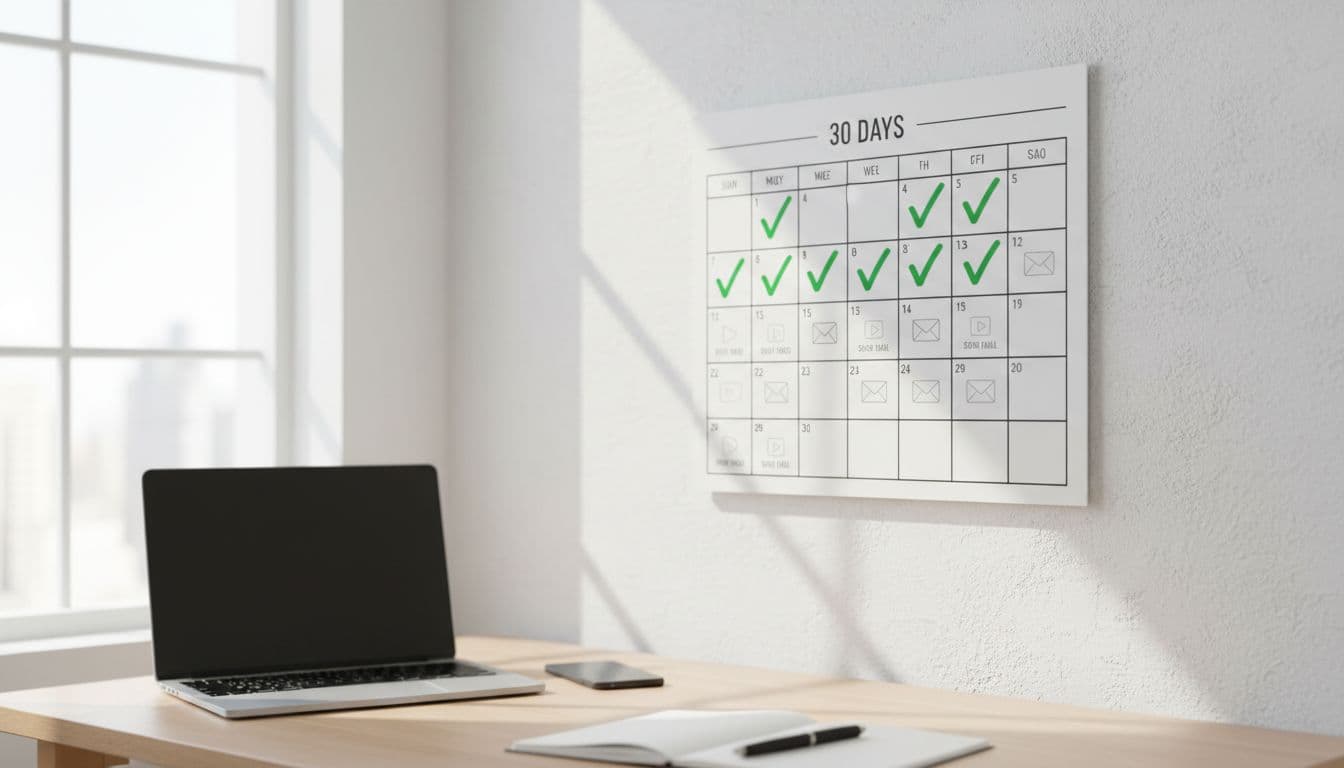
This plan is built for busy people. It’s not “hustle all day.” It’s 20 to 30 minutes most days, with one longer session weekly.
Core system (keep it simple):
- Choose one offer (GDI team build or a single affiliate product).
- Set up one capture page (or a simple opt-in) so you can collect emails.
- Post one short piece of content daily.
- Follow up by email (and reply to people like a human).
- Track weekly, adjust, repeat.
Basic weekly schedule:
- Mon to Fri (20 to 30 minutes): post, reply to comments, send 1 short follow-up email.
- Sat (45 to 60 minutes): review results, write next week’s ideas, tighten your message.
- Sun (optional 10 minutes): quick check-in, light follow-up.
Stay compliant and stay sane:
- Don’t spam groups with links.
- Don’t promise income.
- Don’t hide the cost or what you’re promoting.
Days 1 to 3: Pick one path, set your goal, and set up the basics
Start with a decision that removes stress.
Choose a team rotator path if:
- You want shared momentum and a low monthly plan.
- You prefer a more guided “follow the steps” setup.
Choose affiliate marketing if:
- You want full flexibility in what you promote.
- You’d rather build around a topic (budget meals, home workouts, side hustles).
Set one small goal you can hit in 30 days:
- “Get 20 visitors a day to my page.”
- “Collect 10 emails a week.”
- “Have 5 real conversations a week.”
Minimum tool list (don’t overbuy):
- Email access (Gmail is fine).
- Notes app (phone notes works).
- One place to post content (TikTok, YouTube Shorts, Instagram Reels, or Facebook).
Days 4 to 14: Get traffic for free using short videos and simple posts
For the next 11 days, you’re building one thing: attention that you can turn into clicks and emails.
Content ideas you can copy and adjust:
- “My $10 plan and what I’m focusing on.”
- “One mistake I made trying to earn online.”
- “What I do in 20 minutes a day.”
- “Why I’m building an email list (even as a beginner).”
- “Quick update, what worked this week, what didn’t.”
Use this simple short-content formula:
- Hook: a real problem or moment (no hype).
- One tip: one step they can do today.
- Call to action: “If you want my setup, message me ‘plan’.”
If you want a clear walk through of organic traffic options for affiliates (including picking one channel), this video is a helpful reference:
Days 15 to 30: Follow up, improve your message, and track what works

Most people won’t join the first time they see you. They’re busy. They’re unsure. They’re watching to see if you’re consistent.
Follow-up just means staying in touch in a normal way:
- Send a quick email with one tip.
- Share a short story about what you’re doing.
- Ask if they want help setting up their first step.
Track this once a week (in a simple note):
- Clicks to your page
- Emails collected
- Replies or DMs
- Sign-ups
- Active members (if your system has monthly billing)
Simple improvement loop:
- Keep what gets replies.
- Cut what nobody engages with.
- Stick with it another 30 days.
Progress often looks boring at first, then it stacks.
GDI Rotator Section: How to Start Earning With the My Cash Multiplier
A capture page is a simple page that collects a name and email before someone sees details. It matters because social platforms are rented land. An email list is something you own.
If you’re using a team-build system, a capture page also keeps things organized. Everyone sees the same steps, and you can follow up without chasing people around.
Set expectations the right way: spillover can happen, but it’s not guaranteed. You still want your own daily traffic and your own email list, even if the team system is strong.
What this page is for and how it helps beginners
The My Cash Multiplier capture page is here: https://gdirotator.com/mycashmultiplier/capture2.html
Use it as your front door. Your job is to send people there with honest wording, not pressure.
A clean way to describe it:
- What they’re opting into (info and steps).
- What they’ll learn (how the $10 plan works, how the team system works).
- That they can unsubscribe anytime.
Avoid lines like “guaranteed income” or “no work needed.” Those phrases attract the wrong people and create headaches later.
Simple setup steps: join, connect, and stay active on a $10 plan
Keep this part simple and repeatable:
- Visit https://gdirotator.com/mycashmultiplier/capture2.html and enter your details.
- Follow the sign-up steps shown after the opt-in.
- Complete your account setup (don’t skip profile and payment settings).
- Follow your team’s instructions to get connected to the rotator system (if that’s part of your path).
- Stay active monthly so your position and eligibility stay in good standing.
A “do this weekly” routine that works for beginners:
- Check your back office once.
- Respond to emails and messages.
- Post 3 to 5 pieces of content (you can batch them in one sitting).
That’s it. The power is in repeating the basics.
Conclusion
You can build Passive Income Online with a small budget, but you can’t skip the setup and you can’t skip consistency. Pick one path (a team rotator system like GDI or a simple affiliate offer), choose one free traffic method, and follow up every week like you’re building a real business.
Start today by choosing one option and committing to 30 days. Track your clicks, emails, and conversations, then adjust and keep going. Small steps done daily beat big plans you never finish.