

If you’re trying to grow home based business opportunities, you’ve probably felt the squeeze. Limited time, a small budget, and no team, yet you still need more leads, more sales, and more choices about how you work.
The good news is that home-based work isn’t “rare” anymore. Recent small business data shows most owners are solopreneurs, and many operate from home, with a solid share reporting they’re profitable. That means you’re not behind, you’re in the middle of a big shift.
Real growth usually comes from a few repeatable habits, not luck. This post breaks it into a simple plan: clarify what you sell, market it in a way you can keep up with, then build small systems so opportunities keep coming.
Start with a strong foundation so the right opportunities find you

Planning a niche and offer in a bright home office, created with AI.
Growth feels hard when your business sounds like “I do a bunch of stuff.” Clarity makes marketing easier because people understand you fast. Trust grows faster too, because you look focused, not scattered.
Pick a clear niche and problem you solve (so people know why to hire you)
A niche is just a clear “who” and “what problem.” It doesn’t trap you, it helps people find you. Think of it like labeling a jar. If it just says “food,” nobody knows what’s inside. If it says “coffee,” the right person grabs it.
Simple examples:
- Bookkeeping for plumbers
- Meal prep coaching for busy parents
- Custom party decor for local events
A quick exercise that takes 10 minutes:
- Who you help: (industry, type of person, location, stage)
- Main problem: (what’s frustrating or costly for them)
- Result: (what life looks like after you help)
Put it into one line you can say out loud: “I help [who] solve [problem] so they can [result].” If you can’t say it in one breath, it’s too wide.
Build a simple offer and price it for profit (not just to get a sale)
Most home businesses grow faster when the offer is easy to buy. Aim for 1 to 3 packages so clients can self-select without a long back-and-forth.
A simple package structure:
- Starter: small win, short timeline, lowest price
- Standard: your best seller, strongest value
- Premium: deeper support, faster results, extra access
For each package, be clear on:
- What’s included (deliverables and limits)
- Timeline (7 days, 2 weeks, 30 days)
- Next step (book a call, request a quote, DM a keyword)
Pricing check (keep it simple): estimate your hours + costs, then choose a target hourly rate that feels fair and sustainable. Multiply, then add a buffer for admin time and revisions. Set the package price from that number, not from what you “hope people will pay.” Profit buys you breathing room, and breathing room helps you stay consistent.
Get more customers with simple marketing you can repeat every week
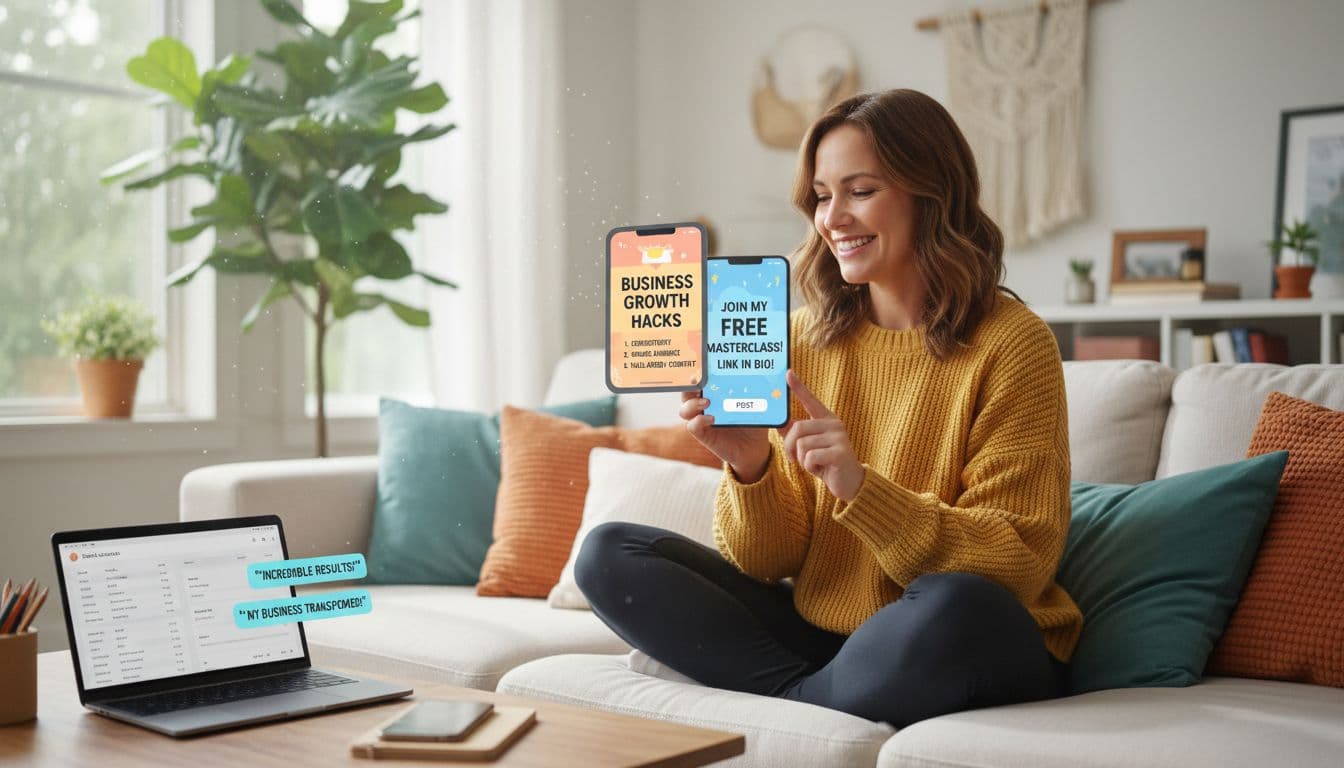
Posting helpful content from home to attract customers, created with AI.
Marketing shouldn’t feel like a daily performance. Think of it like brushing your teeth. Small, steady effort beats random bursts.
A practical way to think about growth is four levers:
- Gain new customers
- Retain current customers
- Grow customer value (upsells, add-ons)
- Reactivate past customers
If you’re doing everything alone, focus on one lever per month. That keeps you from spinning your wheels.
Use one main channel, one backup channel, and a clear call to action
Pick channels based on where buyers already hang out, not what’s trendy.
Common picks for home-based businesses:
- Local services: local Facebook groups, Google Business Profile, Nextdoor
- Visual products: Instagram, TikTok, Etsy
- B2B services: LinkedIn, email
- Education-based offers: YouTube, email
Choose one main channel to post on consistently, plus one backup you can use when life gets busy (email works well because you “own” the list).
What to post (rotate these so you never run out):
- Helpful tips (teach one small thing)
- Proof (before and after, testimonials, results)
- Behind the scenes (your process, tools, how you work)
- Offers (what you sell and who it’s for)
Every post needs a clear call to action. Make it easy:
- “Book a free 15-minute call”
- “DM me the word QUOTE”
- “Reply with your city and I’ll send pricing”
- “Request a custom order”
Time blocks that work in real life: 30 minutes, three times a week. One day to create, two days to engage and follow up.
Turn every client into referrals and repeat business (the easiest growth)
Referrals often convert faster because trust transfers. Don’t wait until you “feel ready.” Ask right after a clear win, like a great result, a compliment, or a project delivery.
A simple referral script you can copy: “I’m glad this worked out. If you know someone who needs help with (problem), I’d love an intro. I can take on one more client this month.”
What to offer: a small credit, a bonus add-on, or a gift card. Keep it simple so you’ll actually do it.
Retention checklist (quick, but powerful):
- Follow-up message 2 to 3 days after delivery
- Review request with a direct link or instructions
- Reorder or renewal reminder (set it on your calendar)
- One monthly email with a tip, a story, and a soft offer
Reactivation is the hidden gold. Once a month, message past clients: “Quick update: I’m offering (new service or limited-time package) this month. Want details?” You’re not begging, you’re making it easy to come back.
Scale without burnout: systems, automation, and smarter use of your time
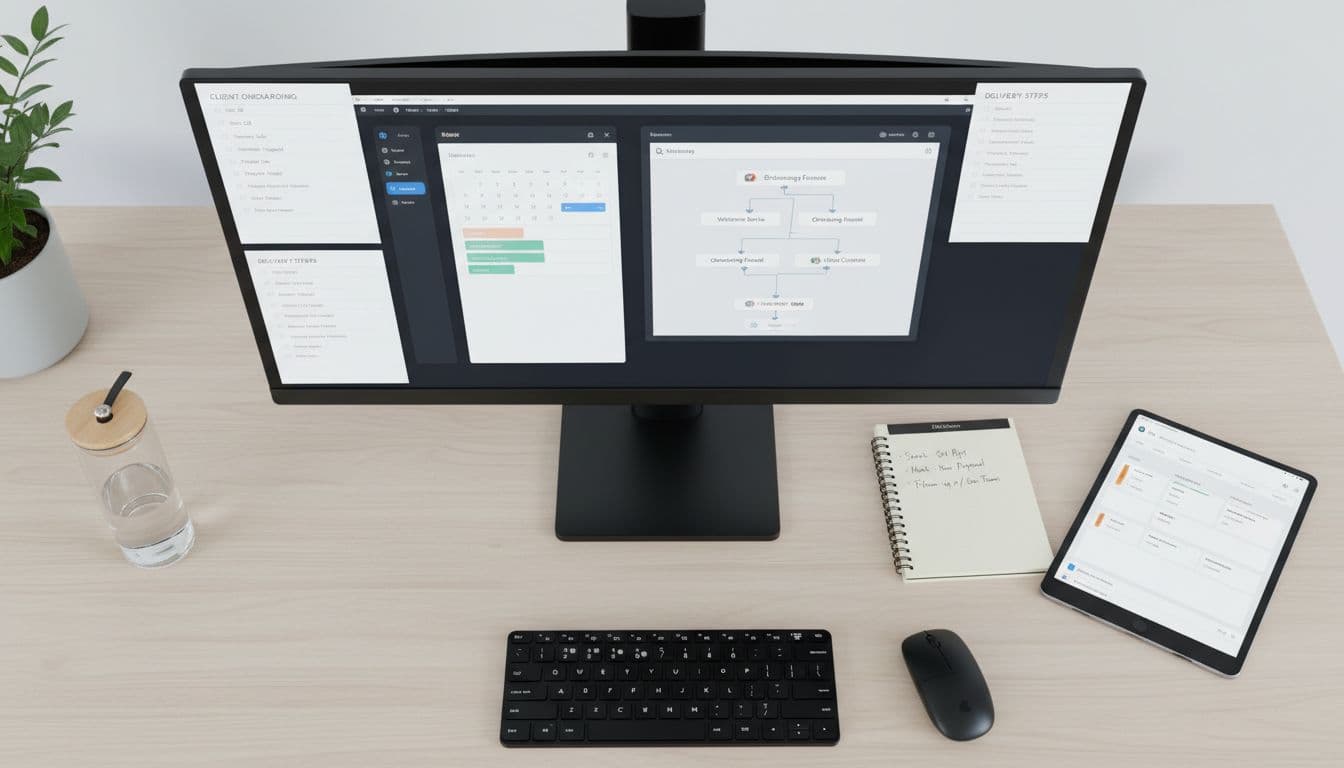
Simple checklists and tools that reduce repeat work, created with AI.
More customers shouldn’t mean chaos. Scaling at home works best when you stop re-inventing the same steps every time.
Create simple systems: a checklist for delivery, onboarding, and follow-ups
Systems sound fancy, but they’re just written steps that make results steady. They also reduce mistakes when you’re tired.
Start with three templates:
- Client intake form: goals, deadline, preferences, key details (so you don’t chase info)
- Delivery checklist: step-by-step from start to finish (so quality stays high)
- Closing email: recap the win, share next-step options, ask for a review and referral
If you only do one system this week, do the closing email. It protects future income because it prompts repeat work, reviews, and referrals.
Use light automation and help (freelancers or a VA) to free up selling time
Automation should remove busywork, not add more apps to manage.
Good first automations:
- Booking link with reminders
- Invoices and payment nudges
- Welcome email after someone buys
- Follow-up email 7 days after delivery
Good first tasks to delegate:
- Editing photos or video
- Scheduling posts
- Inbox sorting and admin
- Simple design updates
A useful rule: only add a tool or hire help if it saves time or increases sales. Track one metric monthly (hours saved, leads, close rate, or revenue). If it’s not helping, cut it fast.
Conclusion: Grow your home-based business with repeatable habits
Growing home based business opportunities doesn’t require nonstop hustle. Build a clear foundation (niche and offer), then commit to repeatable marketing (one to two channels plus referrals), and protect your energy with systems (checklists and light automation).
Try this simple 7-day action plan: write your one-line niche statement, create one package offer, post one helpful tip with a call to action, message 5 past contacts, and set up one follow-up email template. Start small, stay steady, and let consistency do the heavy lifting.