


If you’re looking for a simple way to earn online, Amazon affiliate marketing programs are often the first stop. Not because it’s magical, but because Amazon is trusted, the product selection is huge, and it’s easy to understand how the money flows.
This post explains how Amazon Associates works, what you can realistically earn, and how to set yourself up for approval without guessing. You’ll also see why people still use Amazon even with real limits like a 24-hour cookie and lower rates in some categories.
Think of Amazon Associates as a solid starter engine. It won’t win every race, but it will get you moving fast, especially when you pair it with a simple content plan and consistent publishing.
How the Amazon Associates program actually works (in plain English)
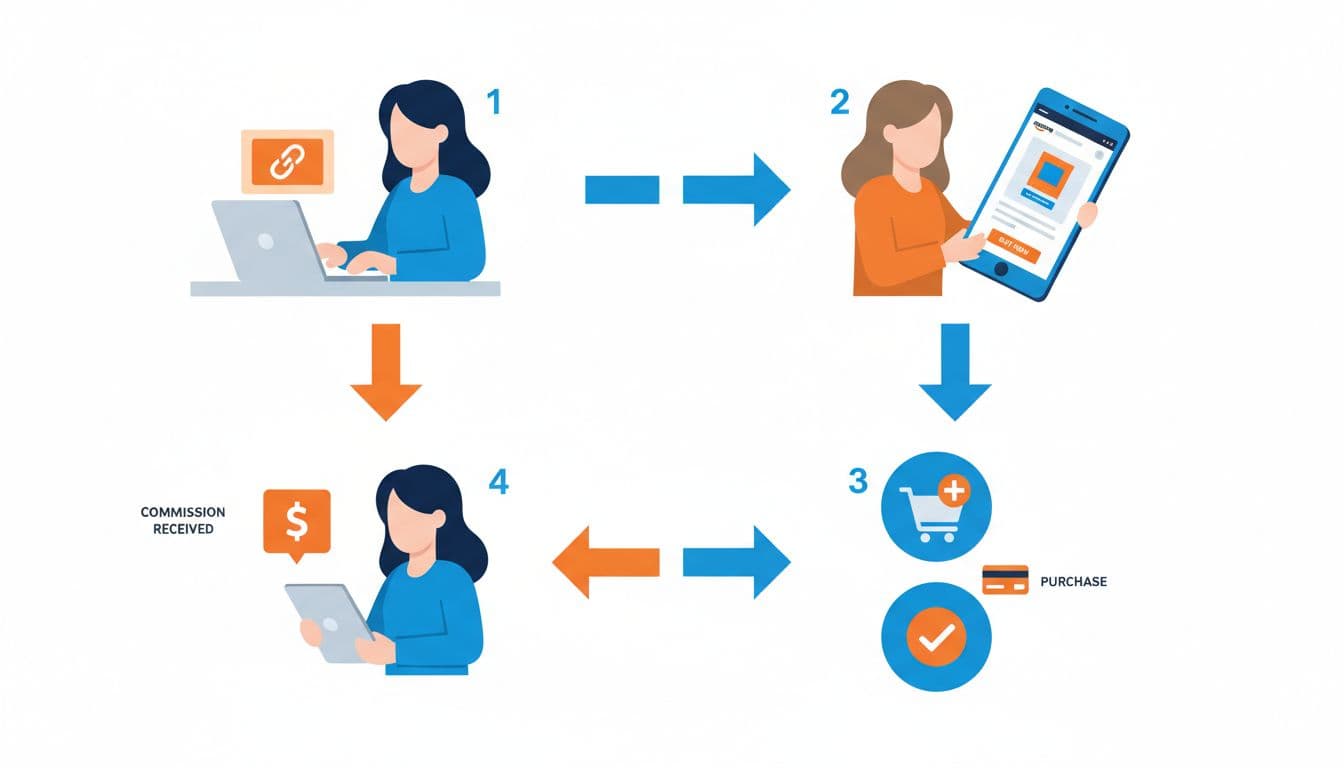
At its core, Amazon Associates is a referral deal. You create helpful content, you add a special Amazon tracking link, a reader clicks it, and Amazon tracks the visit. If the reader buys during the tracked window, you earn a commission.
Here’s the part many beginners miss: you can earn on other items they buy during that session, not just the product you linked to. If your article links to a coffee grinder and the reader also buys filters, mugs, and a book before checkout, those may count too (as long as the purchase qualifies under Amazon’s rules).
Two realities matter right away:
- The tracking window is short (more on that below).
- Rules vary by country. If you have readers in the US, UK, and Canada, you may need separate Associate IDs and program signups for each marketplace.
For official details like category rates and program terms, keep Amazon’s own help pages handy, starting with the Standard Commission Income Rates.
Commissions, bounties, and why the rate is not the whole story
A commission rate is a percentage of the sale. If a $100 product earns 4%, you make $4. Sounds small, and sometimes it is, but don’t judge Amazon Associates only by the percentage.
As of February 2026, rates vary widely by category. Some are around 4% to 4.5% (examples include physical books and some home-related categories), many common categories sit near 3%, and some are as low as 1% (like certain grocery or health-related purchases). Amazon can also set some items to 0% (gift cards are a common example). Rates change, so rely on Amazon’s official chart (linked above) for current numbers.
Then there are bounties, which are fixed payouts for specific actions. These can pay more predictably than product commissions when your audience is a fit. Based on current program info (February 2026), examples include Prime free trial and Amazon Music free trial bounties, and other Prime-related offers.
If your readers are already close to subscribing, a bounty can feel like finding a $5 bill on the sidewalk. Not life-changing, but it adds up.
For a broader beginner-friendly overview of earning methods and setup, see Shopify’s Amazon affiliate program earning guide for 2026.
The 24-hour cookie, the cart rule, and what it means for your content
Amazon’s default tracking cookie is 24 hours. Picture a stopwatch. It starts when the reader clicks your link. If they buy within that day, you can earn.
The “cart rule” is where it gets interesting. If someone clicks your link and adds a product to their cart within that 24-hour window, Amazon can still credit you if they buy later (often described as up to about 89 days, depending on the item and Amazon’s rules). This is why deal-focused content and “best time to buy” angles can work. You’re catching people when they’re already in shopping mode.
There’s another practical twist: if the reader clicks another Associate’s link later, you can lose credit. That’s why sending people to Amazon too early can backfire. Your content needs to do enough work first so the click happens when they’re ready.
If you want a simple explanation of the timing rules and how affiliates think about them, this breakdown of Amazon affiliate cookie duration puts the key ideas in plain terms.
Getting approved without guesswork: what to set up before you apply
Amazon doesn’t want “empty” sites. They want real creators who help real shoppers. That’s good news because it means you don’t need fancy design or a giant following. You need clear intent and useful content.
Before you apply, aim for one of these as your main platform:
- A simple niche website (best for SEO and long-term traffic)
- A YouTube channel (works well if you like talking and demonstrating)
Either way, put your best foot forward. Add basic pages, organize navigation so a human can find things fast, and publish content that solves a problem.
Also, handle the boring stuff early. Tax and payment details can slow you down if you leave them half-finished. Take 20 minutes, do it cleanly, and move on.
If you need a step-by-step look at building an Amazon-focused site from scratch, Network Solutions has a practical guide on creating an Amazon affiliate website. You don’t have to follow it word-for-word, but it helps you see what “complete” looks like.
A simple pre-application checklist that reduces rejection risk
You don’t need 100 posts. You do need enough content that Amazon can see what your site is about and who it helps.
Here’s a realistic target before applying:
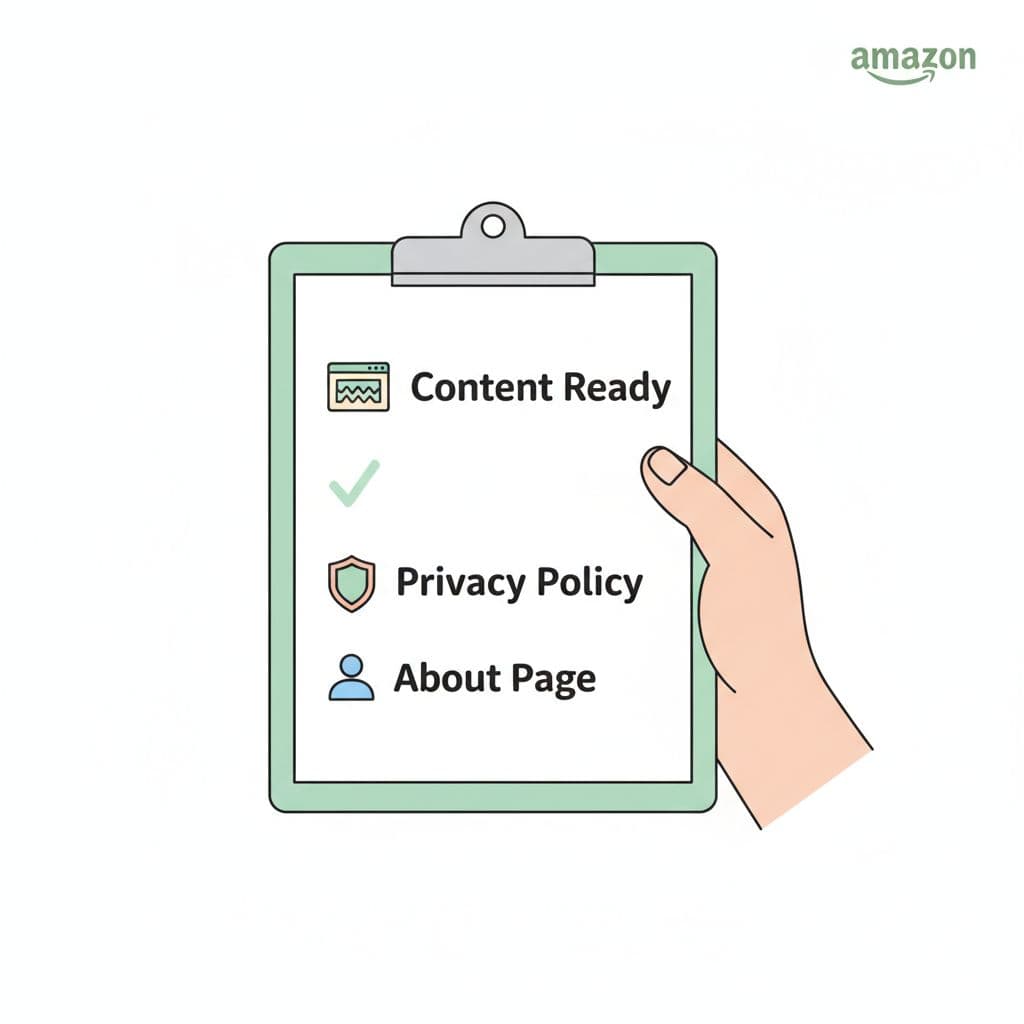
- 10 to 15 helpful articles (or a handful of quality videos) focused on one niche
- An About page that explains who you are and why you’re qualified
- A Contact page (even a basic form is fine)
- A Privacy Policy page (simple, clear, and accurate)
- Clean site navigation (categories, menu, and easy-to-find content)
Be careful with kid-focused content. If your site is directed at children under 13, you’re stepping into a higher-risk area for compliance and ad rules.
Also, be honest about traffic sources. If you plan to use social platforms, say so. If you’re mostly doing SEO, that’s fine too. Amazon cares that the plan is legitimate.
Finally, choose a clean Associate ID. You’ll see it in reports and links for years, so pick something you won’t regret.
Disclosures and link rules you cannot ignore
Affiliate disclosures aren’t optional. Put a clear disclosure near affiliate links and also in a site-wide location (like your footer). Plain language works best: “As an Amazon Associate I earn from qualifying purchases.”
A few rules that keep people out of trouble:
Amazon also restricts where links can appear. For example, Amazon affiliate links generally should not be placed in emails, and you shouldn’t cloak links in a way that hides the Amazon destination. Pricing is another common mistake. Prices change fast on Amazon, so avoid hard-coded price claims unless you’re using approved tools and correct wording.
When you stay clean on compliance, you protect the account you’re trying to build. Getting terminated over avoidable link placement mistakes hurts more than slow growth.
What to promote on Amazon if you want steady commissions

With low rates in many categories and a short cookie, you want products that match buyer intent. That means you’re not writing random product lists for people who are just browsing. You’re helping people who are close to a purchase and need confidence.
A good way to pick what to promote is to start with a problem and build around it. “My back hurts after sitting all day” is a problem. “Standing desk accessories” is a product category that fits the problem. That problem-first approach makes your content feel useful instead of salesy.
Everyday repeat-buy categories can work too, but pay attention to rate and volume. A 1% category can still earn if your traffic is high and your content ranks well, but beginners usually do better starting with products that have clear comparison points and higher average order values.
Also, remember you can earn from the whole cart. Accessories matter. If your main product is a $60 item, but your reader adds four add-ons, your commission grows without more traffic.
Beginner-friendly niche ideas and how to choose yours
Some niches are easier because people naturally search for “best,” “review,” “vs,” and “for beginners.” That’s where Amazon affiliate content shines.
A few beginner-friendly examples:
- Pets (feeding, grooming, training tools)
- Home organization (shelves, bins, labels, closet systems)
- Camping and glamping (sleep systems, stoves, lights)
- Hobbies (painting, fishing, crafts, beginner kits)
- Kitchen basics (knives, cookware, storage, small appliances)
A simple rule that saves months of frustration: pick a niche where you can write 30 content ideas without stretching. If you’re already stuck at idea seven, the niche isn’t ready.
Content types that match Amazon’s short cookie window
Amazon works best when the click happens near the buying moment. That’s why certain article types tend to convert better:
- Product reviews that answer who it’s for, who should skip it, and what to expect
- Comparisons (A vs B) that make the decision feel simple
- Best-of lists for a specific use (best for dorm rooms, best for seniors, best for small kitchens)
- Gift guides tied to real events (Mother’s Day, Father’s Day, graduations, holidays)
- What to buy for content (what to buy for new dog owners, first apartment essentials)
- Accessory add-on articles that support a main product (filters for a pitcher, bits for a drill)
You don’t need a flashy layout, but you do need clarity. Use short sections, obvious pros and cons, and a direct call to action when the reader is ready.
A simple 30-day plan to earn your first Amazon affiliate commissions
Amazon affiliate income is usually slow at first. That’s normal. The goal in your first 30 days isn’t to “quit your job.” It’s to publish enough buyer-focused content to start getting clicks, then improve what works.
Keep it low-cost. Use a basic website, publish consistently, and don’t overthink branding. Your content is the engine.
One more reality: Amazon affiliate links can’t be emailed in the usual way. That’s fine. You can still build an email list to bring readers back to your content, share updates, and recommend non-Amazon offers where allowed.
Week-by-week actions: content, basic SEO, and traffic you can start today
Here’s a simple month plan that stays realistic for beginners:
Week 1: Pick your niche and set up site structure (categories, menu, basic pages). Publish 3 core posts that explain the basics of your topic and build trust.
Week 2: Publish 3 buyer-intent posts (review, comparison, best-for use case). Set up Google Search Console, write strong page titles, and link related posts together naturally.
Week 3: Publish 3 more posts. Add one comparison table where it helps, update earlier posts with clearer intros, and tighten calls to action so the Amazon click happens after you’ve helped the reader.
Week 4: Publish 3 more posts. Add a simple lead magnet (like a one-page checklist). Promote one or two posts using Pinterest or short-form video, then refresh your titles and intros based on what’s getting impressions and clicks.
This plan gives you 12 posts in a month, enough to look real to Amazon and enough data to learn what your audience wants.
How to track what’s working and avoid common beginner mistakes
In Amazon Associates reports, focus on a few basics: clicks, ordered items, conversion rate, and which pages send traffic. The goal is simple, figure out which topics lead to orders, then write more like those.
Common beginner mistakes to avoid:
- Sending cold traffic straight to Amazon before you’ve built trust
- Writing posts with no buying intent (fun to write, weak for sales)
- Never updating older posts (small edits can lift conversions)
- Stuffing too many links into one page (it looks spammy)
- Ignoring bounties that fit your audience
A quick win that stays doable: improve one article per week based on what’s already getting clicks. Small upgrades compound over time.
Conclusion
Amazon Associates is trusted and beginner-friendly, but the short cookie and mixed commission rates mean you win with buyer-intent content and consistency, not hype. Pick one niche, publish a small set of genuinely helpful posts, then apply once your site looks real and organized. After that, let the reports guide you, and keep improving what already works. For next steps on choosing the right model, read this comparison of multilevel marketing vs affiliate marketing, then map your routine using this 90-day side hustle plan.