

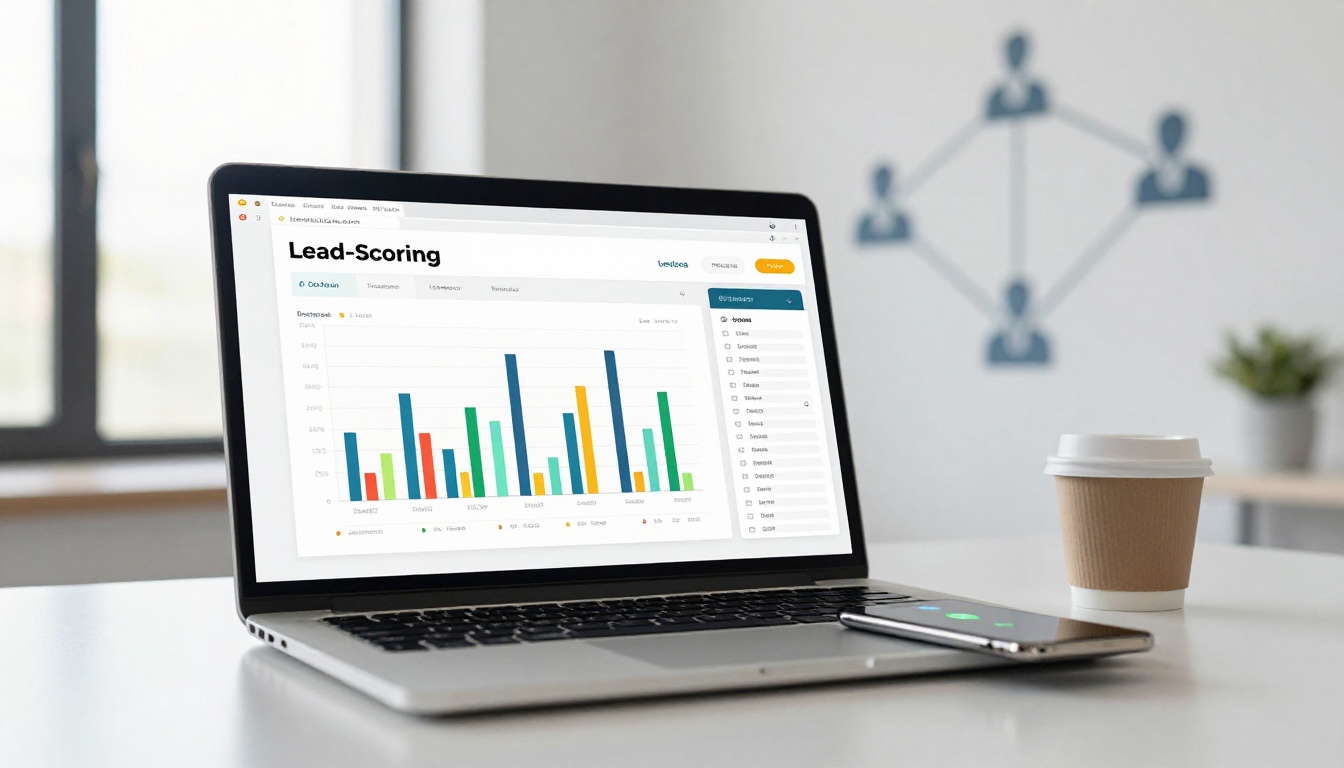
If you’ve ever stared at a messy list of leads from your lead generation, such as DMs, form fills, and “maybe later” replies, you already know the problem: not all leads deserve the same next step. Some should get a call today. Others should get a gentle check-in next week. And a few should get parked until they raise their hand again.
A lead scoring system fixes that fast. It filters people against your ideal customer profile so you aren’t wasting time on the wrong prospects. It’s like putting a simple “priority label” on each person, so your follow-up feels calm, not chaotic.
This matters even more if you’re building a Side Hustle or a Home Base Business and you only have an hour a day. Your time isn’t unlimited, so your order of operations has to be smart.
What a lead scoring system really does for network marketers
A lead scoring system is just a repeatable way to answer one question: “Who should I talk to next?” It doesn’t replace your people skills, your story, or your opportunity presentation. It simply helps you focus those things on the right contacts first.
Think of it like triage in an urgent care waiting room. Everyone gets seen, but not everyone gets seen right now. When you score leads, you stop treating a marketing qualified lead (MQL) who’s just browsing and a sales qualified lead (SQL) who’s ready for a pitch like they’re the same person.
By using explicit scoring from data provided by the lead and implicit scoring from their actions, the system helps you identify buying signals and define your buyer personas more clearly.
Here’s what you gain right away:
- More calls with the right people: The ones asking good questions, showing up on Zoom, or requesting details.
- Less follow-up guilt: You’ll know who’s in “today,” “this week,” and “later.”
- Cleaner documentation: Every DM, call, and outcome gets logged, so you don’t rely on memory.
- Better Team Build habits: When your team uses the same scoring rules, conversations get more consistent (and training gets easier).
This system works best when your lead flow is organized at the front door. If you’re sending traffic from social profiles, tighten up the path people take before they DM you. A clear bio page makes your leads warmer before you ever speak to them (here’s a helpful guide to an Optimized Link‑in‑Bio Page for Network Marketers).
One more point that matters: score permission. If someone didn’t ask for info (or didn’t say “yes, follow up”), they should never get the same attention level as someone who did. Permission-based follow-up keeps your brand clean and your conversations human.
Build the lead scoring model in Google Sheets (copy, paste, and start)

You can run this lead scoring model in Google Sheets, Airtable, or Notion. Sheets is the quickest because formulas are simple and sorting is easy. While Sheets is great for beginners, professional tools like HubSpot and Salesforce offer advanced CRM integration for this process.
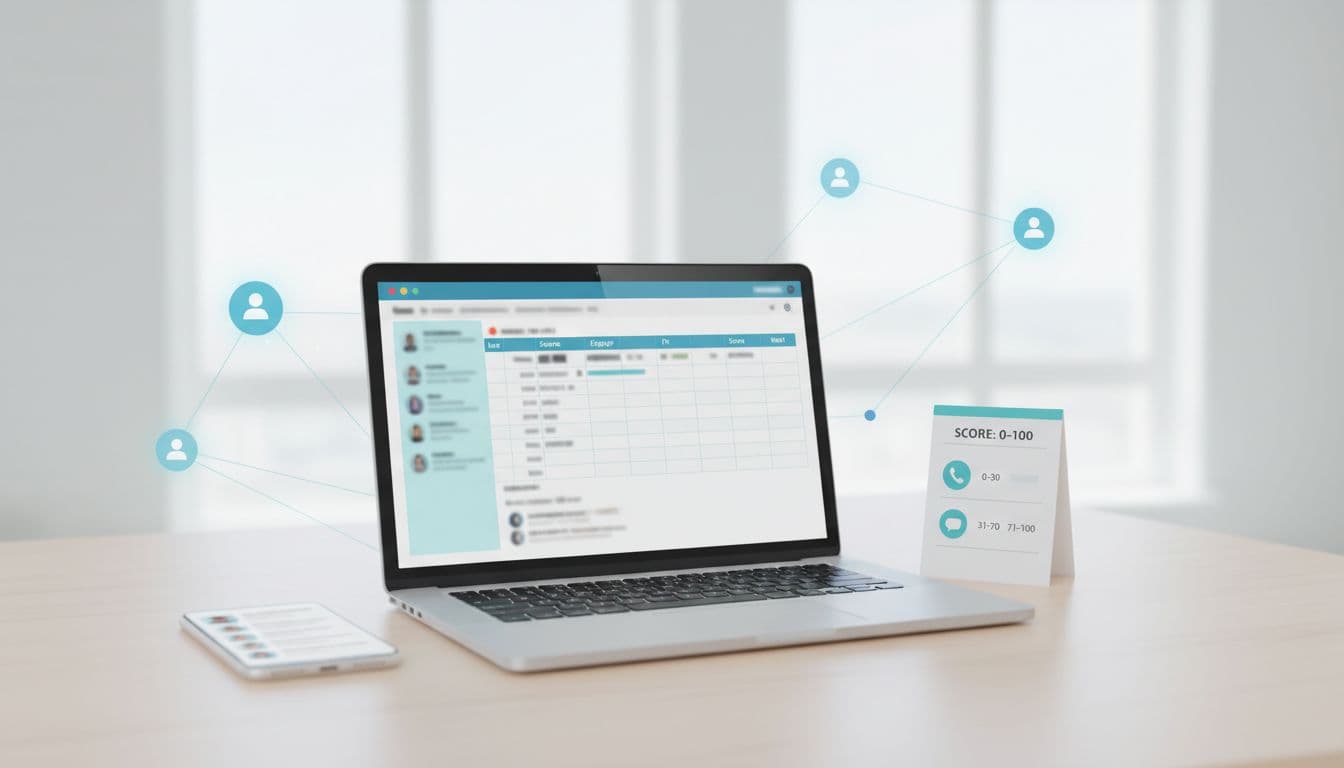
Create columns like this (left to right): Date Added, Name, Handle, Source, Last Touch, Engagement, Fit, Timing, Permission, Attribute Index Score, Status, Next Step, Next Follow-Up Date, Notes.
In these columns, you will collect behavioral data for Engagement and demographic data for Fit to assign point values.
Then paste this starter table into a blank Sheet (row 1 is headers). Replace the example rows with your own leads.
| Date Added | Name | Handle | Source | Last Touch | Engagement (0-30) | Fit (0-30) | Timing (0-20) | Permission (0-20) | Attribute Index Score | Status | Next Step | Next Follow-Up Date | Notes |
|---|---|---|---|---|---|---|---|---|---|---|---|---|---|
| 2026-01-30 | Sam T. | @sam_t | IG DM | 2026-01-29 | 24 | 22 | 15 | 20 | Book Zoom | Asked about start cost | |||
| 2026-01-30 | Rita G. | @rita_g | FB comment | 2026-01-27 | 10 | 18 | 8 | 10 | Send info link | Busy, “check back” | |||
| 2026-01-30 | Chris P. | @chris_p | Lead magnet | 2026-01-30 | 28 | 26 | 18 | 20 | Call today | Watched video, requested details |
Simple scoring rules (keep it lightweight)
Don’t overthink the numbers. You’re building a quick decision tool, not a science project.
Use these plain guidelines:
- Engagement (0-30): Did they reply, watch a video, ask questions, show up to a Zoom, or ghost you? Use negative lead scoring to subtract points if they ghost or say no.
- Fit (0-30): Are they a good match for your offer and values (budget comfort, goals, coachable attitude, wants to learn)?
- Timing (0-20): Are they looking now, “next month,” or “someday”?
- Permission (0-20): Did they opt in, request info, or say it’s okay to follow up?
Copy-paste formulas (Google Sheets)
Assuming Attribute Index Score is in column J and your first lead row is row 2. These work great in Sheets, and you can later export to HubSpot or Salesforce for more advanced HubSpot workflows:
- Attribute Index Score (J2):
=SUM(F2:I2) - Status (K2):
=IF(J2>=70,"Hot",IF(J2>=40,"Warm","Nurture")) - Next Follow-Up Date (M2):
=IF(K2="Hot",TODAY()+1,IF(K2="Warm",TODAY()+3,TODAY()+7))
“Hot” status means the lead meets your MQL threshold.
If you want one more layer of safety, add a rule that prevents “Hot” status if permission is low:
- Status with permission gate (K2):
=IF(I2<10,"Nurture",IF(J2>=70,"Hot",IF(J2>=40,"Warm","Nurture")))
Now freeze row 1, turn on filters, and sort by Status, then Attribute Index Score (largest to smallest). That’s your daily call list. For scaling up with HubSpot or Salesforce, dive into their CRM integration features.
Use your scores to run DMs, calls, Zooms, and presentations (without pressure)

Once your list is sorted by your lead scoring model, your follow-up becomes simple: Hot leads get calls, Warm leads get conversations, and lead nurturing prospects get value and space. This system boosts your sales productivity and conversion rate by following a customer journey map, turning marketing qualified leads into sales qualified leads.
Here’s a clean routine that fits a busy Make Money Online schedule:
- Hot (70-100): Call or voice note today, then book a Zoom. Use the bant approach (Budget, Authority, Need, Timing) to qualify them further. Your goal is a clear next step, not a long DM thread.
Permission-based line: “Want to do a quick 10-minute call so I can point you the right way?” - Warm (40-69): Ask one good question, then share one resource. Keep it light and specific.
Example: “What’s the main goal right now, extra $500 a month or replacing income?” - Lead nurturing (0-39): Don’t chase. Send a short check-in or a helpful post once a week, then move on.
Permission-based line: “Want me to circle back next week, or would you rather I just send tips as I post them?”
This is where documentation pays you back. After every touch, update three things: Last Touch date, Notes, and Next Step. You’ll stop repeating yourself, and you’ll stop forgetting who said what, keeping your attribute index score accurate.
To add simple Automation without getting fancy, set two saved views (or filters), just like you can in Hubspot or Salesforce:
- Call List: Status = Hot, sort by Total Score desc.
- Follow-Up List: Next Follow-Up Date is today or earlier.
Hubspot and Salesforce excel at automating your attribute index score updates and follow-up alerts, with features for lead distribution if you’re building a team (distribute high-scoring leads to match buyer personas). Hubspot’s tools make it easy to segment by ideal customer profile, while Salesforce handles advanced workflows for sales qualified leads.
If you’re posting content daily and need prompts for value posts that warm leads up, use a tool that removes the blank-page problem (this Free Social Media Content Generator for MLM can help you stay consistent).
And if you want your scoring system to support your bigger plan, tie it to a weekly routine you can repeat for 90 days (this 90‑Day Side Hustle Blueprint for MLM fits well with score-first follow-up).
When your list is clean, your opportunity presentations feel better too. You’ll present to people who match your ideal customer profile, are already engaged, already curious, and already giving you permission to help.
Conclusion
A simple lead scoring system doesn’t make you robotic; it makes you consistent and builds a sustainable lead scoring model. You’ll call the right people first from your lead generation efforts, follow up with less stress through smarter data analysis, and keep better notes with an attribute index score that prevents score degradation by keeping data fresh, which is a big deal when you’re building a Home Base Business in real life hours. Start with four scores, total them, sort your list, and let the numbers guide your next call. For scaling with seamless CRM integration, migrating to HubSpot or Salesforce (or HubSpot’s advanced tools) is a natural next step. The calm you feel will be the first win, the results come right after.